Good morning. A few things are true this morning that were not true Friday: a drug nearly doubled survival in one of the deadliest cancers we have, Google moved to sell stock for the first time since 2005 to keep up with its AI bill, and the company that makes the boring boxes inside data centers jumped almost 30% overnight. We have the cancer news, the money news, the soccer summer that may not pay off, and one new word. Let's go.
(Quick housekeeping: nothing below is investment advice. We tell you where the money is moving and why. What you do with that is yours.)
The best news of the morning came out of a cancer conference
Start with the rare thing: good news that is unambiguously good. At ASCO, the big annual cancer meeting in Chicago, a drug called daraxonrasib nearly doubled survival in previously treated metastatic pancreatic cancer, from a median of about 6.7 months to 13.2, and cut the risk of death by roughly 60%. Pancreatic cancer almost always wins. Doctors at the plenary called the result a grand slam and gave it a standing ovation, which is not a thing that happens at a conference full of people trained to be skeptical. This is life extension, not a cure, and worth saying plainly. It is still a rare survival breakthrough in a disease that hands out almost none. The same plenary brought a prostate cancer result where J&J's Erleada plus hormone therapy made high-risk patients about nine times more likely to have little or no cancer left at surgery. If you have a person in your life waiting on either of those, today is a better day than yesterday.
Now the part the oncology press is treating as a separate story, and shouldn't. One of the weekend's biggest lung cancer results belongs to a Chinese company. Akeso and Summit's ivonescimab, paired with chemo, cut the risk of death by about 34% against an established standard of care in a China-based squamous lung cancer trial, and it became the first China-originated cancer drug ever selected for ASCO’s plenary session in the meeting’s 61 year history. Analysts are still arguing about how well that translates to patients outside China and whether it genuinely threatens Merck's Keytruda, the biggest drug franchise in American pharma, so this is a warning shot, not a coronation. But put even a warning shot next to the year we are having with Beijing over chips and rare earths, and the picture sharpens. The supply-chain story that started in semiconductors is creeping toward the medicine cabinet, and a Chinese biotech just produced one of the conference's headline results and pointed it at an American giant.
The jobs picture, briefly (and it got more confusing this morning)
Sam Altman now says he was "pretty wrong" that AI would gut entry-level white-collar work, and Dario Amodei, who once put the number at half of white-collar jobs, now says automation may grow the work people do. Both walked it back in the same season that tech layoffs ran well into six figures, and both men happen to be preparing enormous IPOs that a calmer story benefits nicely.
Then this morning it became even more complicated by the numbers. April job openings jumped to 7.6 million, the highest in nearly two years and well above the 6.8 million economists expected, even as hiring slipped. But look at who’s posting the jobs: nearly the entire increase came from professional and business services, and the gains skew to the biggest firms, while mid-size employers still sit below their pre-pandemic baseline. So the simple story, AI came for the jobs, does not fit the data. Demand for workers is rising, not collapsing. It is just pooling at the top.
Each of these companies and founders are telling self-serving stories. AI is changing the world that we live and work in. We think it's impossible to predict where things land over the next few years. Be the best at what you do and take more control over your earning power – that’s the safest path forward regardless of what is true.
The AI trade everyone is missing isn’t the chatbots. It's everything they need to run successfully.
You already know the model companies. Here is the question worth more of your time: what do they have to buy from everyone else to keep scaling? The answer is where a lot of the money is quietly going.
The AI build splits into layers, and most of them are unglamorous. There are the chips, the servers, the networking gear that lashes thousands of chips together, the cooling systems that keep them from melting, and underneath all of it, the electricity. The constraint people are slowest to understand is that last one. Power, not chips, is the thing in short supply. Hyperscaler AI spending is on track for roughly $725 billion this year, and the International Energy Agency expects data center electricity demand to more than double by 2030, with US data centers eating close to half of all the growth in the country's power demand for the rest of the decade. You can’t ship a model without somewhere to run it, and you cannot run it without electricity, which nobody has to spare.
That is why the least glamorous companies are having the best year. The clearest proof landed overnight: HPE, which makes the servers AI runs on, jumped almost 29% before the open after revenue grew 40% and its AI orders and backlog nearly doubled. Up the chain, the utilities that own nuclear plants are signing decade-long deals to power AI directly. Constellation Energy is restarting Three Mile Island under a 20-year deal with Microsoft, and Talen Energy is sending Amazon 1,920 megawatts of nuclear power from its Susquehanna plant through 2042. One layer in, Vertiv sells the liquid cooling and power gear data centers now need as chips run too hot for air, and Arista sells the high-speed switches that connect the clusters. Even the rock underneath moved: uranium spot prices briefly topped $100 a pound early this year before settling closer to $94, a two-year high. The rule from every gold rush holds: the people who reliably got rich sold the picks.
Two scenes from this morning show you the mood, and they point in opposite directions. First, Marvell jumped more than 20% before the market opened because Nvidia's Jensen Huang said it could be the "next trillion-dollar company." Marvell is not vapor. It makes custom AI silicon and has real exposure to this build. But a one-fifth move on a single sentence, from a man who did not buy it or sign anything, tells you how much of this market now trades on conviction as much as on numbers.
Second, and pointing the other way: Alphabet plans to raise about $80 billion by selling stock, because even Google's cash machine cannot keep pace with a capex bill near $190 billion this year, roughly double 2025. Berkshire Hathaway is buying $10 billion of it at a discount. Berkshire, the most famous value shop on earth, did not chase the stock on the open market like a believer. It came in at a markdown, on its own terms, which is what you do when you think the asset is good and the price is silly.
So the morning hands you both halves of the trade. One company sells stock because the build is real and ruinously expensive. Another gains a fifth of its value because a famous man said a nice thing. If you want a tell about which one is the durable bet, it is probably wiser to watch the buyer who demanded the discount, not the stock that popped on a compliment.
Iran update, and your gas tank, briefly
A piece of why gas has felt stubbornly expensive came into sharper focus this week. Hopes for a second round of US-Iran talks unraveled, Tehran suspended its back-channel communications with Washington, and reports surfaced that Iran and its allies are weighing a full closure of the Strait of Hormuz, the chokepoint a fifth of the world’s oil passes through. Crude jumped on the news: global Brent traded near $95 a barrel, with US crude (WTI) close behind, and both benchmarks are now up more than 45% since the war began in late February. Oil is not the only thing that sets the pump price, and a move in crude does not hit your tank overnight. But the direction matters: pricier oil makes the inflation number the Fed is watching harder to bring down, and that pushes the rate cut the president keeps demanding further out of reach. Hold that thought for the last item.
Fashion: we told you the midmarket would eat luxury. The industry just admitted it.
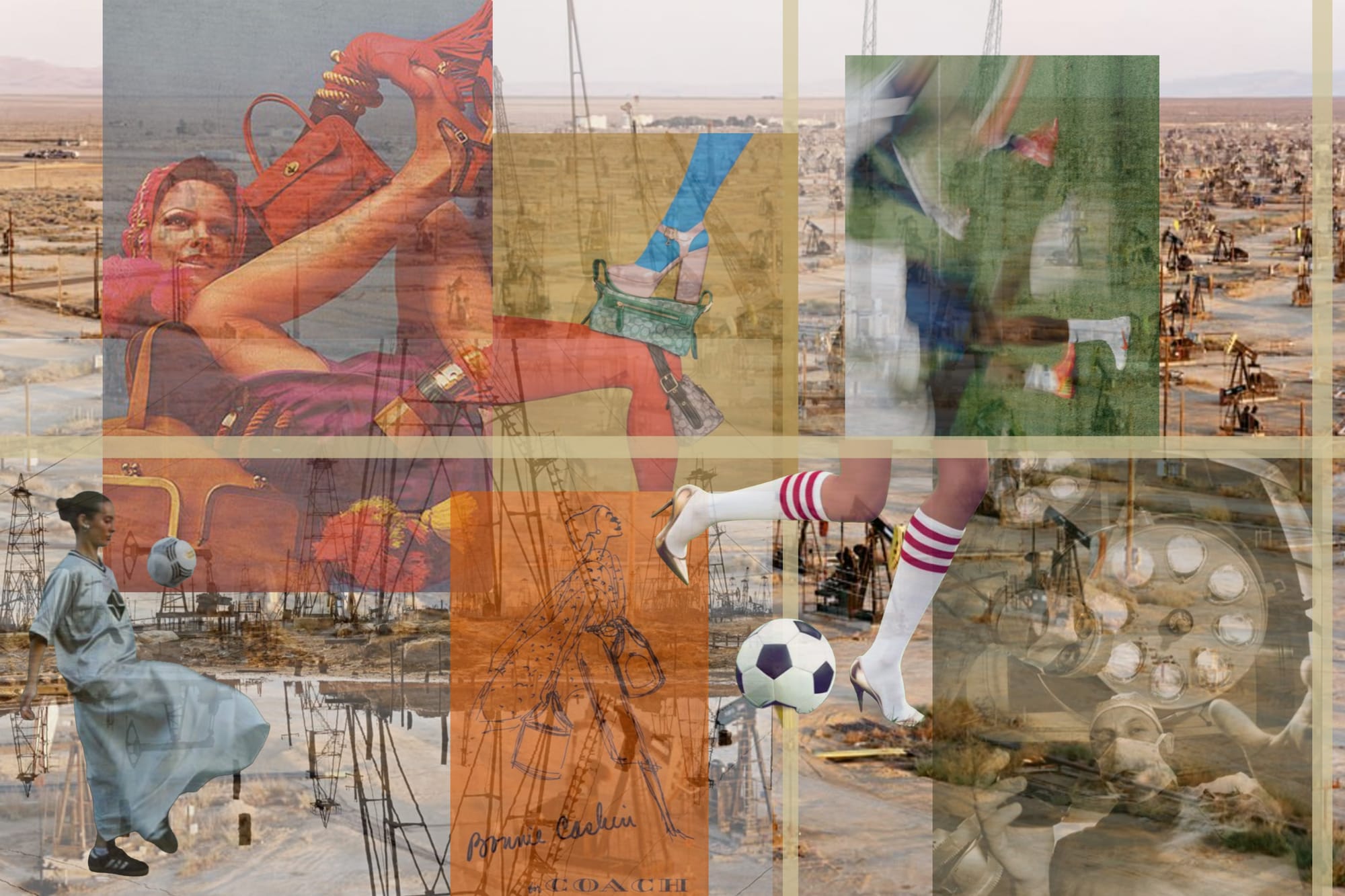
In May we made a call. The woman buying the $400 Coach Tabby instead of the $4,000 bag was not trading down in a bad year, she was the whole market repricing what taste costs. The industry’s own numbers had already said as much: the State of Fashion 2026 report from BoF and McKinsey names the midmarket the fastest-growing part of fashion, the segment now creating the most value, after years of luxury houses raising prices on the same handbags and betting she would never flinch. Coach is now 89% of Tapestry after a 29% sales quarter, and it got there by giving her a reason to feel good about spending less, like the Coach x Brain Dead collaboration that dropped May 29.
Another thing worth paying attention to is what happens to the bag after she buys it. Resale is becoming part of the store, not a flea market you visit later. Zalando just put Vestiaire Collective's secondhand luxury next to its full-price racks across 14 European markets, and BoF argues most brands are still leaving the resale opportunity on the table. Keep an eye on Croissant, the startup turning resale value into something close to cash back at the register.
The whole logic of today’s buyer is that a smart purchase comes with an exit. She wants to feel good walking in and made whole walking out. The brands that figured that out are winning her, and the houses that spent a decade assuming she had no floor are the ones currently explaining flat quarters.
The fun one: the soccer summer that was supposed to print money
The World Cup kicks off in North America June 11, 48 teams, 104 matches, 16 host cities including 11 in the US, the largest tournament ever, and the brands have gone all in. The pitch to host cities was a windfall: hotels full, restaurants slammed, merch flying off shelves at Macy's, not just the soccer stores. FIFA, for its part, has forecast tens of billions in gross economic impact.
Except the windfall is arriving quietly, if at all. Nearly 80% of hotels across the US host cities are booking below their original forecasts, dragged down by visa headaches for overseas fans, the geopolitics, and ticket and travel prices that priced out the casual traveler. Economists keep finding the same unglamorous truth about mega-events: the spending mostly moves money around rather than making new money, as the visitors who come displace the ones who would have come anyway. So enjoy the summer, the watch parties, the genuinely great soccer. Just file the "economic boom" promise where you filed the Olympics version of it. The party is fun but the financial windfall is mostly a press release.
Word of the Week: irascible
(adjective) easily angered, quick-tempered.
A useful word for the season we are entering. Trump installed Kevin Warsh as Fed chair expecting rate cuts "very quickly," markets are pricing in little chance of a cut this year, and Warsh has said he promised nothing. Then this week's oil move made a hot inflation number likelier and a cut even less likely. So you have a president with a famously short fuse, an appointee who may have to tell him no in public at this month's Fed meeting, and a war premium pushing the math the wrong way. The back half of the economic year may turn on one man's temper. Worth having the precise word for it.