Four pieces. The Devil Wears Prada 2 opened to the biggest debut of Meryl Streep's career, and Hollywood spent decades getting this question wrong. The Pentagon signed AI deals with Microsoft, Amazon, and Google and skipped Anthropic. Alphabet and Meta both nearly doubled their 2026 AI capex. And Chanel showed Cruise in Biarritz.
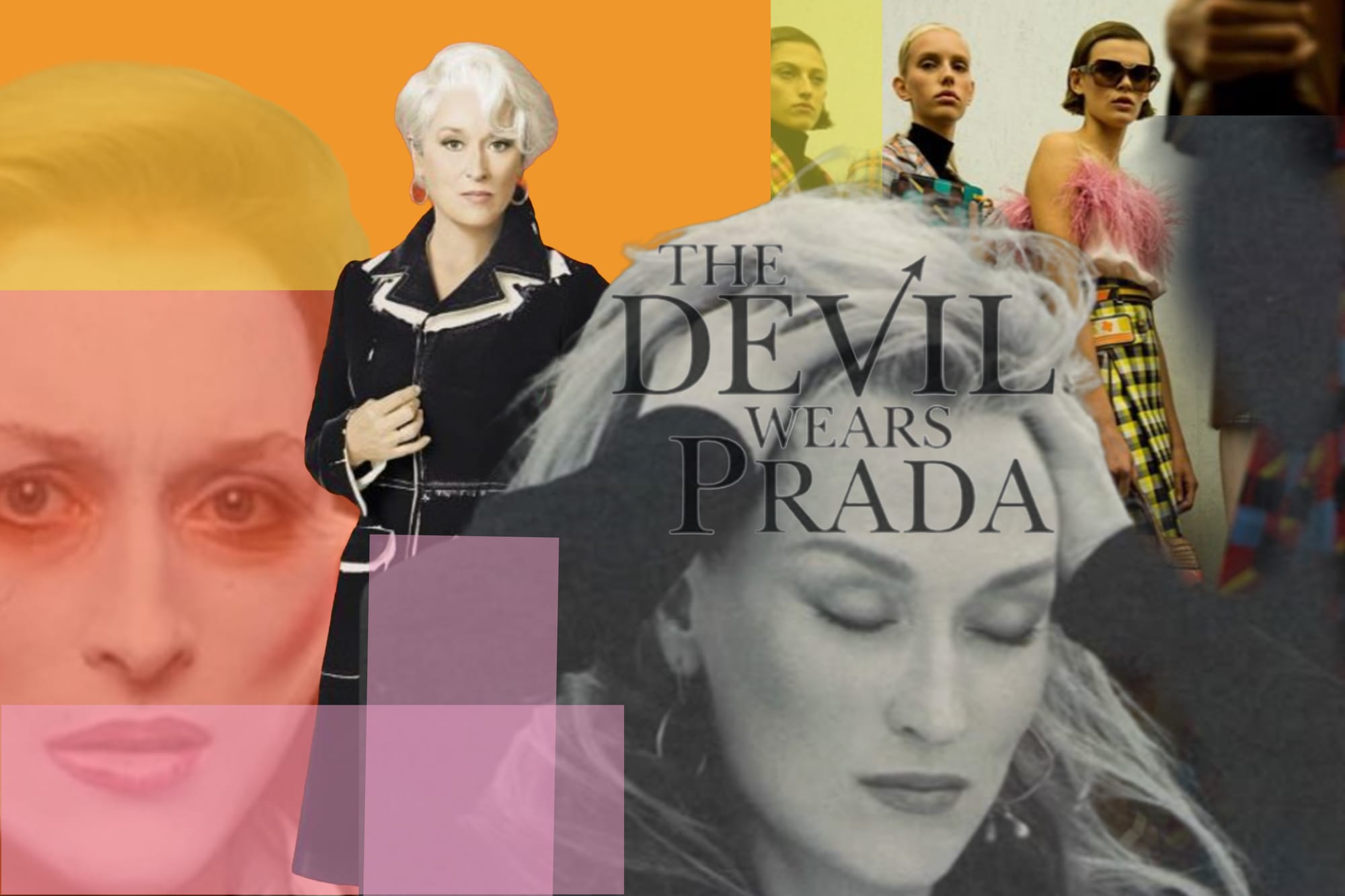
The Devil Wears Prada 2 beat Meryl Streep's career record
The Devil Wears Prada 2 opened to $77 million domestic and $233.6 million worldwide. The numbers are the highest opening of Meryl Streep's career, passing Mamma Mia 2 ($34.9M) and Into the Woods ($34M). The original Devil Wears Prada opened to $27.5 million in 2006. Streep is 76 years old.
Hollywood has spent decades insisting that audiences will not show up for women in lead roles past 50. They have just been proven wrong, on the biggest possible scale, by a 76-year-old in a Prada coat. The studios' premise about women past 50 has been a habit more than an empirical claim. The Streep number is another contradicting data point they have so far declined to count. The test is whether the project studios approve over the next two years, respond to what the box office has been showing them, or repeat what they have been telling themselves.
Pentagon signs AI deals with Microsoft, Amazon, and Google. Anthropic was left out.
The Pentagon announced AI partnerships with Microsoft, Amazon, and Google on Thursday for classified military use, advancing capabilities amid an internal dispute over safeguards. Anthropic was not included.
This is the cost of the position. Anthropic has built its public identity around AI safety: refusing to release models like Mythos, limiting access through Project Glasswing, and operating under stricter deployment safeguards than its peers. Microsoft, Amazon, and Google have been more flexible about what they will sell to whom. When the Pentagon chose partners for classified defense work, it chose the flexible ones.
The more potent question is whose vision of AI deployment becomes the default. If safety oriented systems lose the institutional buyer market, the constraint on irresponsible deployment becomes essentially voluntary, sustained only by what the labs themselves are willing to refuse. The optimistic read of Thursday’s news is that Anthropic is playing a longer game, that institutional trust will catch up to safety positioning, and that the Pentagon will return when the geopolitical AI risk environment forces a reconsideration. The pessimistic read is that this is the moment Anthropic’s position cost it the most lucrative customer base in the country and that the AI safety community just learned ethics and values are not paramount when considering what the market is willing to pay for.
What to watch over the next twelve months is whether the institutional trust pendulum swings back. If safety-positioned labs keep losing contracts to flexible competitors, the AI safety project loses its commercial leverage. If enough deployment failures land on the flexible labs, the Pentagon will eventually recalibrate. The fight is not about one defense contract. It is about whether safety has a commercial future.
AI capex week: Alphabet and Meta both nearly doubled their 2026 spend
Alphabet and Meta both reported Q1 earnings on Wednesday and both effectively doubled their capital spending plans on AI infrastructure for 2026. Alphabet now expects to spend $175-185 billion this year on data centers, chips, and the physical buildout supporting its AI services. Meta guided to a similar scale, nearly twice last year's total. Google Cloud, the part of Alphabet that sells AI services to other companies, grew 63 percent year-over-year on enterprise demand.
The question on every analyst's checklist for the last six months has been: when does AI capex stop being free money the market rewards and start becoming a margin compression story instead? The answer this quarter is: not yet. The market rewarded both reports.
Separately, Microsoft and OpenAI restructured their partnership into a nonexclusive arrangement. OpenAI can now sell to Microsoft's competitors. Microsoft can run interference on non-OpenAI models. The dollar value of the original deal has likely been protected for both sides, but the strategic exclusivity that defined it is gone.
The AI infrastructure trade is now the market's highest-conviction trade. The question this week's print does not answer is whether it remains so when Iran resolves (or does not) and Hormuz reopens (or does not). That is the trade's actual vulnerability and we will be watching.
For now, AI Capex remains the dominant trade. The signal that something has changed will not come from the AI companies themselves, which have every incentive to keep building. It will come from outside the AI economy: a sustained spike in oil prices, a credit-market shift, or a major enterprise customer pulling back. Until one of those arrives, the market keeps rewarding the spend.
Chanel showed Cruise in Biarritz
Chanel showed its Cruise 2026 collection in Biarritz on Tuesday. The location was the first read: a return to the South of France that the house has been threading into its identity for decades, from Coco Chanel's own time in Deauville through more recent Métiers d'art productions.
Cruise collections do double duty. They are real revenue, designed to land in stores during the high-margin pre-holiday window, and they are the brand's least-watched runway moment, which makes them the best place to test new ideas. Whatever creative direction the house has been quietly developing under Matthieu Blazy likely showed up in pieces of this collection, before it is asked to carry the full weight of a couture or ready-to-wear season.
Chanel has been deliberately quiet on its broader creative direction strategy through 2026. The Cruise show is one of the most legible reads available on where the house is going next. We will return with a longer take once the looks have been digested.
What makes this collection worth tracking beyond Chanel itself is what it signals about the broader luxury reset. Kering is in retreat, Gucci is restructuring, and most heritage houses are still figuring out what their brands mean to a new generation of buyers. Chanel's strategic silence in 2026 is unusual. Biarritz was the first real glimpse of where the house plans to answer the question every legacy brand is now sitting with: what their name should mean to the next generation of buyers.